
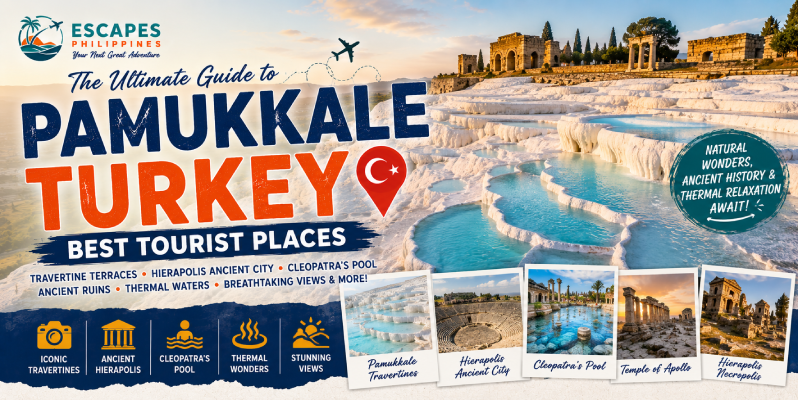
Pamukkale Travel Guide: 15+ Amazing Places to Visit 🇹🇷
Looking for the Best Tourist Places in Pamukkale? Famous for its dazzling white travertine terraces, warm mineral-rich waters and the ancient ruins of Hierapolis, Pamukkale is one of Türkiye’s most extraordinary destinations. Often called the “Cotton Castle,” this spectacular UNESCO World Heritage Site combines natural beauty, ancient history, thermal waters and unforgettable photography opportunities in one remarkable location.
From walking across the brilliant white terraces and exploring the ancient city of Hierapolis to relaxing in Cleopatra’s Pool and discovering nearby archaeological treasures, there are plenty of places to visit in Pamukkale. Moreover, Pamukkale can easily be included in a wider Türkiye itinerary alongside Istanbul, Cappadocia, Ephesus and other fascinating destinations.
In this comprehensive guide, we’ll explore the Best Tourist Places in Pamukkale, the most interesting things to do, the area’s historical significance, the best viewpoints, nearby attractions and practical tips to help you plan an unforgettable trip.
Why Visit Pamukkale?
Pamukkale is unlike almost anywhere else in the world.
Imagine standing beside enormous white terraces formed by mineral-rich thermal water while ancient Roman ruins stretch across the plateau above you. That extraordinary combination is what makes Pamukkale so special.
According to the UNESCO World Heritage Centre, calcite-laden waters emerging from a cliff nearly 200 meters high created Pamukkale’s distinctive mineral formations, including terraces, petrified waterfalls and pools. The ancient thermal city of Hierapolis was later established beside this remarkable natural landscape.
Consequently, visiting Pamukkale isn’t simply a sightseeing experience. It is an opportunity to experience geology, archaeology, history and Turkish culture in one destination.
Top Reasons to Visit Pamukkale
- See the famous white travertine terraces
- Explore the ancient city of Hierapolis
- Visit one of Türkiye’s most famous UNESCO World Heritage Sites
- Experience the historic thermal-water tradition
- Explore ancient Roman and Greek ruins
- Visit Cleopatra’s Pool
- Discover one of Türkiye’s most spectacular archaeological landscapes
- Enjoy breathtaking sunrise and sunset photography
- Explore nearby ancient sites and villages
- Combine Pamukkale with a wider Türkiye itinerary
If you’re planning a larger international adventure, you can also explore the Destinations collection from Escapes Philippines for more travel inspiration.
Best Tourist Places in Pamukkale You Should Not Miss
Although Pamukkale is best known for its white terraces, the area contains much more than the iconic landscape seen in travel photographs.
The ancient city of Hierapolis spreads across the plateau, while thermal pools, historic monuments, viewpoints and nearby attractions add even more reasons to stay longer.
Here are some of the Best Tourist Places in Pamukkale to include in your itinerary.
1. Pamukkale Travertines
The Pamukkale Travertines are the attraction that put this destination on the world’s travel map.
These brilliant white terraces were created over thousands of years as mineral-rich thermal water flowed down the hillside and deposited calcium carbonate.
The result is an almost surreal landscape of white terraces, shallow pools and cascading formations that can look especially spectacular when sunlight reflects from the mineral surfaces.
The Turkish name “Pamukkale” translates roughly as “Cotton Castle,” a name inspired by the site’s striking white appearance.
Why Are the Pamukkale Travertines Famous?
The travertines combine an unusual geological formation with a long history of human use. Thermal waters attracted visitors to the area for centuries, eventually contributing to the development of the ancient spa city of Hierapolis.
UNESCO recognizes the natural landscape and the ancient city together as the Hierapolis-Pamukkale World Heritage property. :contentReference[oaicite:1]{index=1}
Best Time to See the Travertines
Early morning and late afternoon can provide beautiful light for photography. However, conditions vary by season, weather and water flow, so allow yourself enough time to appreciate the terraces rather than rushing through them.
2. Hierapolis Ancient City
One of the biggest mistakes first-time visitors can make is treating Pamukkale as nothing more than a natural attraction.
Above the famous white terraces lies the extensive archaeological site of Hierapolis, an ancient Greco-Roman spa city that developed around the area’s thermal waters.
UNESCO states that the Attalid dynasty established Hierapolis as a thermal spa toward the end of the 2nd century BC, while the city later flourished during the Roman period. Its remains include baths, temples, monumental structures, a theatre and a large necropolis. :contentReference[oaicite:2]{index=2}
Therefore, exploring Hierapolis is essential if you want to understand the historical importance of Pamukkale.
What Can You See in Hierapolis?
- Ancient Theatre
- Necropolis
- Temple remains
- Roman baths
- Monumental gates
- Colonnaded streets
- Ancient churches
- Martyrium of St. Philip
- Historic public buildings
Allow several hours if you want to explore the archaeological area properly.
3. Hierapolis Theatre
The Hierapolis Theatre is one of the most impressive surviving structures within the ancient city.
Built into the hillside, the theatre provides an excellent example of ancient architectural planning while also offering expansive views across the surrounding landscape.
Its decorative details and monumental scale help visitors imagine how important Hierapolis once was as a major city and thermal destination.
Why Visit the Ancient Theatre?
The theatre is particularly rewarding for travelers interested in ancient history, Roman architecture and photography.
Take time to look at the surviving architectural details rather than simply photographing the panoramic view.
4. Cleopatra’s Pool
Cleopatra’s Pool, also known as the Antique Pool, is one of Pamukkale’s most famous thermal-water experiences.
The pool is associated with the ancient spa tradition of Hierapolis and is surrounded by archaeological remains, giving the experience a distinctive historical atmosphere.
Warm mineral water and submerged ancient columns create a memorable setting that feels very different from an ordinary swimming pool.
Why Visit Cleopatra’s Pool?
- Experience warm thermal water
- Swim among ancient-looking archaeological remains
- Enjoy a relaxing break from sightseeing
- Experience an attraction connected to Hierapolis’ thermal tradition
However, access conditions, operating arrangements and fees can change, so check current information before your visit.
5. Hierapolis Necropolis
The Hierapolis Necropolis is one of the largest and most fascinating sections of the ancient site.
Stretching across a considerable area, the necropolis contains numerous ancient tombs and funerary monuments.
Its scale demonstrates the importance of Hierapolis as a major settlement during antiquity.
For history enthusiasts, the necropolis offers valuable insight into ancient burial traditions and the social importance of funerary architecture.
What Makes the Necropolis Interesting?
Unlike a single monument, the necropolis is an extensive landscape filled with different types of tombs and structures.
Walking through it provides a stronger sense of the size and historical depth of ancient Hierapolis.
6. Temple of Apollo
The remains of the Temple of Apollo provide another fascinating glimpse into the religious life of ancient Hierapolis.
According to UNESCO, the temple was built on a geological fault associated with underground vapors, and religious practices developed around the unusual geological setting. :contentReference[oaicite:3]{index=3}
This is one of the places where the natural and cultural stories of Pamukkale come together particularly well.
Visitors interested in ancient religion, archaeology and mythology should include this area when exploring Hierapolis.
7. Plutonium
Near the Temple of Apollo is the area historically associated with the Plutonium, a sacred location connected with the ancient cult of Pluto.
The geological activity in this area contributed to its religious significance in antiquity.
While the attraction may not have the visual impact of the white travertines, its historical importance makes it worthwhile for travelers exploring the archaeological side of Pamukkale.
8. Frontinus Gate
The Frontinus Gate is one of the monumental entrances associated with ancient Hierapolis.
Walking through the archaeological remains around this area helps visitors understand the scale and urban planning of the ancient city.
It is also an excellent location for photography because the surviving stone architecture contrasts beautifully with the surrounding landscape.
9. Domitian Gate
The Domitian Gate is another important architectural feature of Hierapolis.
As you explore the ancient city, the monumental gates help illustrate how Hierapolis was organized and connected to its major streets and public spaces.
History lovers should allow enough time to explore these structures rather than focusing exclusively on the more famous theatre.
10. Antique Pool Area
The area surrounding the Antique Pool provides an opportunity to experience Pamukkale’s thermal heritage from a different perspective.
The Romans developed Hierapolis partly because of the area’s thermal waters, and bathing played an important role in ancient urban life.
Today, visitors can experience the area’s thermal tradition while surrounded by archaeological remains.
For many travelers, this combination of relaxation and history becomes one of the highlights of the trip.
11. Martyrium of St. Philip
The Martyrium of St. Philip is one of the most significant early Christian monuments within Hierapolis.
UNESCO identifies the building as an important Christian monument and states that Hierapolis became an important religious center during the Eastern Roman period. :contentReference[oaicite:4]{index=4}
The structure’s unusual octagonal design makes it particularly interesting for visitors fascinated by religious history and ancient architecture.
Why Visit the Martyrium?
- Important early Christian heritage
- Distinctive architectural design
- Connection to the religious history of Hierapolis
- Excellent historical photography opportunities
12. Byzantine Church and Christian Heritage
Hierapolis continued to be an important religious center after the Roman period.
Several Christian structures remain within the archaeological site, reflecting the city’s changing role over the centuries.
UNESCO recognizes the Christian monuments of Hierapolis as an outstanding architectural group dating primarily from the 4th to 6th centuries. :contentReference[oaicite:5]{index=5}
Consequently, travelers interested in ancient civilizations can see how the city’s identity evolved over time rather than viewing Hierapolis as a single-period archaeological site.
13. Cleopatra’s Pool Viewpoint
Even if you don’t plan to swim, the area around Cleopatra’s Pool can be an interesting stop while exploring Hierapolis.
The combination of thermal water, ancient stone remains and surrounding archaeological structures creates a distinctive visual atmosphere.
Photography can be particularly rewarding when the light is soft.
14. Pamukkale Sunset Viewpoints
Pamukkale is beautiful throughout the day, but sunset can transform the landscape completely.
The white travertines can take on warm golden, pink and orange tones as the sun approaches the horizon.
Rather than leaving immediately after exploring the main attractions, consider staying until later in the day if your schedule allows.
Sunset Photography Tips
- Arrive at your preferred viewpoint early
- Bring a wide-angle lens if available
- Protect your camera from water and mineral deposits
- Use the changing light to capture different moods
- Don’t forget to photograph the ancient ruins as well as the travertines
15. Pamukkale Viewpoints
One of the best ways to appreciate Pamukkale is to see the entire landscape from a distance.
Elevated viewpoints around the area can reveal the scale of the white terraces and the surrounding Denizli plain.
From a distance, the travertines appear almost like a snow-covered mountainside, particularly when the sunlight reflects off the white mineral deposits.
These viewpoints are especially useful for travelers who want dramatic landscape photographs without relying only on close-up images of the pools.
Best Tourist Places in Pamukkale for History Lovers
If history is your main reason for visiting, focus on the archaeological side of the destination.
Your priority list should include:
- Hierapolis Ancient City
- Hierapolis Theatre
- Hierapolis Necropolis
- Temple of Apollo
- Plutonium
- Frontinus Gate
- Domitian Gate
- Martyrium of St. Philip
- Ancient thermal baths
- Christian monuments
UNESCO describes Hierapolis as an exceptional example of a Greco-Roman thermal installation established on an extraordinary natural site. :contentReference[oaicite:6]{index=6}
Best Tourist Places in Pamukkale for Nature Lovers
Although the ancient city is fascinating, nature remains one of Pamukkale’s greatest attractions.
Nature lovers should prioritize:
- Pamukkale Travertines
- Thermal terraces
- Mineral pools
- Panoramic viewpoints
- Sunset viewpoints
- Surrounding countryside
- Nearby thermal areas
The site’s geological formations are the result of mineral-rich thermal waters flowing over the cliff and depositing calcite, creating the terraces and petrified waterfall-like formations for which Pamukkale is famous. :contentReference[oaicite:7]{index=7}
Best Tourist Places in Pamukkale for Photography
Photographers will find plenty of opportunities in Pamukkale.
Top Photography Spots
- Travertine terraces: Best for iconic Pamukkale photographs
- Thermal pools: Excellent for reflections and close-up compositions
- Hierapolis Theatre: Great for architecture and panoramic views
- Ancient ruins: Ideal for combining history and landscape
- Sunset viewpoints: Beautiful warm tones across the terraces
- Hierapolis streets: Excellent for archaeological detail
For the most dramatic results, experiment with different perspectives instead of photographing only the most recognizable viewpoint.
Best Tourist Places in Pamukkale for Couples
Pamukkale can be a surprisingly romantic destination.
Couples can combine sightseeing with relaxing thermal experiences, sunset walks and scenic photography.
Romantic Things to Do in Pamukkale
- Watch sunset over the travertines
- Enjoy a thermal-water experience
- Explore Hierapolis together
- Take panoramic photographs
- Enjoy a Turkish dinner nearby
- Stay overnight in the surrounding area
If you’re planning a romantic international vacation, you can also explore the Couples Trip ideas from Escapes Philippines.
Best Tourist Places in Pamukkale for Families
Families can enjoy Pamukkale as well, especially when children are interested in unusual landscapes and ancient ruins.
- Travertine terraces
- Ancient theatre
- Hierapolis archaeological area
- Panoramic viewpoints
- Thermal-water experiences where appropriate
- Nearby cultural attractions
However, families should be prepared for walking, uneven archaeological surfaces and potentially hot conditions during summer.
For more family travel inspiration, visit the Trip Types collection from Escapes Philippines and explore child-friendly travel possibilities.
How Pamukkale Became a UNESCO World Heritage Site
Pamukkale is not simply a famous natural attraction. It is part of the UNESCO-listed Hierapolis-Pamukkale World Heritage property.
The site was inscribed on the UNESCO World Heritage List in 1988. UNESCO recognizes both the natural and cultural significance of the area, including the extraordinary travertine landscape and the archaeological remains of Hierapolis. :contentReference[oaicite:8]{index=8}
The site’s Outstanding Universal Value comes from the remarkable relationship between the natural thermal landscape and the ancient city that developed around it.
This is precisely what makes Pamukkale different from a conventional archaeological site or natural attraction: you experience both at the same time.
You can read the complete official information through the UNESCO World Heritage Centre’s Hierapolis-Pamukkale page.
Why Hierapolis Makes Pamukkale More Interesting
Imagine seeing only the white terraces and then leaving.
You would certainly see something beautiful, but you would miss the deeper story of the destination.
Hierapolis explains why people were attracted to this landscape for centuries. The thermal waters were not simply a geological curiosity; they contributed to the development of a major ancient spa city.
As a result, the ruins provide context for the natural attraction.
The theatre shows the city’s architectural ambition. The necropolis demonstrates its size and social importance. The temples reveal its religious traditions. The Christian monuments show how its identity changed over time.
Therefore, the best way to experience Pamukkale is to combine the natural and historical attractions rather than treating them as separate destinations.
Best Things to Do in Pamukkale
Beyond simply photographing the famous terraces, there are several ways to make your visit more memorable.
Walk Across the Travertines
Experience the iconic white landscape while following the current visitor rules and designated access areas.
Explore Hierapolis
Set aside several hours to explore the archaeological remains instead of rushing through them.
Visit Cleopatra’s Pool
If open and suitable for your travel plans, enjoy the unique experience of bathing in the historic thermal setting.
Watch the Sunset
Stay late enough to experience the changing colors across the terraces.
Take a Guided Historical Tour
A knowledgeable guide can provide context that isn’t always obvious when looking at ancient ruins independently.
Try Turkish Cuisine
Make time for a proper Turkish meal rather than treating Pamukkale as a quick stop between destinations.
Travelers interested in cultural experiences can also browse the Cultural Trips from Escapes Philippines for more destination inspiration.
How Long Should You Spend in Pamukkale?
Many travelers visit Pamukkale as a day trip. However, staying overnight can provide a more relaxed experience.
A rushed visit may allow you to see the main travertines and a few sections of Hierapolis, but a longer stay gives you more time for photography, archaeology and nearby attractions.
One Day in Pamukkale
A one-day visit can cover the main travertines, Hierapolis, the theatre and selected archaeological attractions.
Two Days in Pamukkale
Two days allow a slower pace, additional sightseeing and more flexibility around sunrise or sunset.
Three Days in Pamukkale
Three days can work well if you want to explore Pamukkale thoroughly while also visiting nearby archaeological and natural attractions.
What Makes Pamukkale Different from Cappadocia?
Both destinations are among Türkiye’s most photographed landscapes, but they offer completely different experiences.
| Feature | Pamukkale | Cappadocia |
|---|---|---|
| Famous For | White travertines and thermal waters | Fairy chimneys and hot-air balloons |
| Major Heritage Site | Hierapolis-Pamukkale | Göreme National Park and Rock Sites of Cappadocia |
| Landscape | White mineral terraces | Rock valleys and fairy chimneys |
| History | Greco-Roman thermal city | Cave settlements and rock-cut churches |
| Signature Experience | Travertines and thermal waters | Hot-air ballooning |
If you’re planning a Türkiye trip, you don’t necessarily have to choose between them. Combining Istanbul, Cappadocia and Pamukkale can create a diverse itinerary covering major cities, unique landscapes and ancient history.
Plan Your Pamukkale Adventure
Pamukkale deserves more than a quick photograph and a rushed departure.
Its white terraces may be what first attracts travelers, but Hierapolis, the thermal tradition, ancient monuments and surrounding landscapes provide the deeper experience.
For more international travel ideas, explore the Escapes Philippines Trips collection.
You can also browse the Escapes Philippines Destinations to discover more places around the world.
Best Time to Visit Pamukkale
The best time to visit Pamukkale depends on what you want from your trip. Generally, spring and autumn are excellent choices because temperatures are more comfortable for walking around the travertines and exploring the extensive ruins of Hierapolis.
Summer can be beautiful as well, but daytime temperatures can become quite high. Therefore, starting your sightseeing early can make the experience much more comfortable.
Winter brings cooler temperatures and fewer visitors, although weather conditions can affect your experience. Nevertheless, the combination of white travertines and surrounding landscapes can look spectacular during the colder months.
Spring in Pamukkale
Spring is one of the most pleasant periods for exploring the Best Tourist Places in Pamukkale. The weather is generally suitable for walking, sightseeing and photography, while the surrounding countryside begins to look more vibrant.
Summer in Pamukkale
Summer offers long daylight hours and plenty of sunshine. However, temperatures can become hot, particularly around midday. Consequently, early-morning sightseeing is highly recommended.
Autumn in Pamukkale
Autumn is another excellent option. Cooler temperatures make exploring Hierapolis and the travertines more enjoyable, while the softer seasonal light can be excellent for photography.
Winter in Pamukkale
Winter is ideal for travelers who prefer a quieter atmosphere. However, you should be prepared for colder conditions and possible changes to outdoor activities because of weather.
What Is the Best Time of Day to Visit Pamukkale?
The time of day can make a significant difference to your Pamukkale experience.
Early morning is particularly attractive for travelers who want cooler temperatures, softer light and a quieter atmosphere.
Late afternoon can also be excellent because the changing sunlight creates warmer tones across the white travertines.
If you have enough time, consider spending a large portion of the day at the site rather than arriving only for a quick photograph.
How to Get to Pamukkale
Pamukkale is located in Denizli Province in southwestern Türkiye. The nearest major transport hub is Denizli, while the village of Pamukkale is only a short distance from the archaeological site.
Travelers can reach the region by air, bus, train or private transportation depending on their starting point.
Getting to Pamukkale from Istanbul
Traveling from Istanbul is possible by domestic flight to the Denizli area followed by ground transportation. Alternatively, long-distance buses connect Istanbul with Denizli.
For travelers who want to save time, flying is generally the more convenient option.
Getting to Pamukkale from Cappadocia
If you’re combining Cappadocia and Pamukkale, you’ll need to plan your transportation carefully because the destinations are relatively far apart.
A combination of domestic flights, buses or organized tours can work depending on your itinerary.
If you’re planning both destinations, our Escapes Philippines Destinations section can provide additional international travel inspiration.
Getting to Pamukkale from Ephesus
Pamukkale and Ephesus can be combined in a Türkiye itinerary because both destinations are major historical attractions in western Türkiye.
Depending on your schedule, you can travel between them by road, organized tour or private transportation.
Getting to Pamukkale from Denizli
Denizli is the main regional transportation hub for visitors heading toward Pamukkale. From Denizli, local transportation, taxis, private transfers and organized tours can take travelers toward the archaeological area.
How to Get Around Pamukkale
Once you arrive in the Pamukkale area, many of the major attractions are concentrated around the Hierapolis-Pamukkale site.
However, because the archaeological area is extensive, comfortable footwear is essential.
Walking
Walking is the best way to experience the archaeological site because it allows you to appreciate the ruins, landscape and changing viewpoints at your own pace.
Taxi
Taxis can be useful when traveling between accommodation, transportation hubs and attractions outside the main archaeological area.
Private Transfer
A private transfer can be convenient for families, couples or groups traveling with luggage.
Organized Tours
Organized tours are particularly useful for visitors who want transportation, sightseeing and historical explanations arranged together.
Where to Stay in Pamukkale
Although Pamukkale can be visited as a day trip, staying overnight allows you to explore the area at a more relaxed pace.
Pamukkale Village
Staying near Pamukkale village provides convenient access to the travertines and Hierapolis. It is a practical option for travelers who want to start sightseeing early.
Best for: First-time visitors, sightseeing-focused travelers and short stays.
Denizli
Denizli offers a wider range of accommodation, restaurants and transportation options. It can be useful if Pamukkale is part of a larger regional itinerary.
Best for: Travelers who want more city facilities and transportation choices.
Thermal Hotels
The surrounding region is known for thermal tourism, so travelers interested in wellness may want to consider accommodation offering thermal-water facilities.
Best for: Couples, wellness travelers and visitors seeking relaxation.
How Much Does a Pamukkale Trip Cost?
Your total Pamukkale travel budget depends on accommodation, transportation, food, tours and the length of your stay.
For general planning purposes, the following approximate budgets can help:
- Budget traveler: Around $40–$70 per person per day
- Mid-range traveler: Around $80–$150 per person per day
- Comfort traveler: Around $150–$300+ per person per day
These figures are only broad planning estimates. Actual prices can vary considerably depending on the season, hotel category, transportation choices, exchange rates and activities.
Where Your Money Goes
- Accommodation
- Transportation
- Food and drinks
- Attraction admission
- Guided tours
- Thermal experiences
- Shopping and souvenirs
If you’re traveling from the Philippines, remember to account separately for international airfare, travel insurance and other Türkiye destinations when creating your overall budget.
Entrance Tickets and Attraction Costs
Admission policies, ticket prices and access arrangements can change, so travelers should verify current information close to their travel date rather than relying on old blog posts or social-media prices.
The official Republic of Türkiye Ministry of Culture and Tourism Museums platform is the appropriate place to check current museum and archaeological-site information before your visit.
Similarly, the UNESCO World Heritage Centre provides authoritative background information about the Hierapolis-Pamukkale World Heritage property.
What to Eat in Pamukkale
Exploring the Best Tourist Places in Pamukkale can easily fill your day, so don’t forget to make time for Turkish cuisine.
The surrounding region offers traditional Turkish dishes as well as familiar international options.
Must-Try Turkish Foods
- Gözleme: Thin Turkish flatbread filled with ingredients such as cheese, spinach or potatoes
- Pide: Boat-shaped Turkish flatbread topped with meat, cheese or vegetables
- Çöp Şiş: Small skewers of grilled meat
- Köfte: Seasoned Turkish meatballs
- Meze: Small dishes designed for sharing
- Mercimek Çorbası: Traditional Turkish lentil soup
- Baklava: Sweet layered pastry with nuts and syrup
- Turkish Coffee: Strong coffee prepared traditionally
- Turkish Tea: A staple of Turkish hospitality
Trying local food is a simple way to make your Pamukkale trip feel more immersive rather than treating the destination as just another sightseeing stop.
What to Pack for Pamukkale
Your packing list should change depending on the season. Nevertheless, a few essentials are useful for almost every Pamukkale trip.
- Comfortable walking shoes
- Lightweight clothing
- Weather-appropriate jacket
- Sunscreen
- Sunglasses
- Hat or cap
- Reusable water bottle
- Small backpack
- Power bank
- Camera or smartphone
- Swimwear if you plan to use permitted thermal facilities
- Modest clothing for religious or cultural sites
Footwear Is Especially Important
Pamukkale involves considerable walking, and some surfaces can be uneven. Therefore, comfortable footwear with good grip should be one of your highest priorities.
Essential Pamukkale Travel Tips
Start Early
Early starts can help you avoid the strongest midday heat and give you more time to explore the archaeological site.
Carry Water
Walking around Hierapolis can take several hours. Staying hydrated is particularly important during warmer months.
Protect Yourself from the Sun
There may be limited shade in exposed sections of the archaeological area. Sunscreen, sunglasses and a hat can make a significant difference.
Don’t Rush Through Hierapolis
The travertines may be the main attraction, but the ancient city contains a remarkable collection of monuments. Give yourself enough time to appreciate it.
Check Current Access Rules
Visitor routes and access restrictions can change to protect the travertines and archaeological remains. UNESCO notes that visitor management measures are used to protect the property’s natural and cultural values. :contentReference[oaicite:0]{index=0}
Check Weather Before Your Trip
Weather can influence walking conditions and the overall experience. Therefore, check a reliable forecast shortly before departure.
Responsible Tourism in Pamukkale
Pamukkale is an exceptionally fragile natural and archaeological environment.
The white terraces are not simply decorative rock formations. They are living geological features created by mineral-rich thermal waters, while the surrounding archaeological landscape contains irreplaceable cultural heritage.
UNESCO’s management information specifically highlights conservation, controlled visitor routes and restrictions designed to protect the travertine terraces and the archaeological property. :contentReference[oaicite:1]{index=1}
How You Can Help Protect Pamukkale
- Follow marked visitor routes
- Respect restricted areas
- Never damage or remove mineral formations
- Don’t touch ancient structures unnecessarily
- Don’t leave litter behind
- Respect archaeological remains
- Follow photography restrictions
- Listen to local guides and site staff
- Support local businesses
- Use water responsibly
Remember: the goal is to leave Pamukkale looking just as extraordinary for the next generation of travelers.
One-Day Pamukkale Itinerary
If you’re short on time, a well-planned one-day itinerary can still cover the main highlights.
Morning
- Arrive early
- Explore the Pamukkale Travertines
- Walk toward Hierapolis
- Visit the major archaeological highlights
Afternoon
- Explore Hierapolis Theatre
- Visit the Necropolis
- See the Temple of Apollo area
- Explore additional archaeological monuments
Late Afternoon
- Visit Cleopatra’s Pool if available and included in your plans
- Return toward the travertines
- Enjoy sunset views
This schedule is relatively busy, so travelers who prefer slow travel should consider staying overnight.
Two-Day Pamukkale Itinerary
Day 1 — Pamukkale and Hierapolis
- Pamukkale Travertines
- Hierapolis Ancient City
- Hierapolis Theatre
- Temple of Apollo
- Necropolis
- Sunset viewpoint
Day 2 — Relaxation and Nearby Exploration
- Slow morning
- Thermal experience
- Cleopatra’s Pool if available
- Local Turkish breakfast or lunch
- Explore nearby attractions
- Relax before continuing your Türkiye journey
This itinerary provides a much more relaxed experience than trying to see everything in one day.
Three-Day Pamukkale Itinerary
Day 1 — Travertines and Hierapolis
Spend the first day exploring the main UNESCO World Heritage attractions, including the travertines and major archaeological monuments.
Day 2 — Thermal and Cultural Experiences
Use the second day to enjoy thermal experiences, explore local surroundings and discover more of the region’s cultural character.
Day 3 — Nearby Ancient Sites
Use your third day for a nearby archaeological excursion or continue toward another major destination in western Türkiye.
Travelers with additional time can combine Pamukkale with Ephesus, Aphrodisias or other historical destinations depending on their route.
Best Places to Visit Near Pamukkale
One of the advantages of visiting Pamukkale is its location within a region packed with historical and cultural attractions.
Aphrodisias
Aphrodisias is an extraordinary ancient city known for its marble architecture, sculpture and monumental remains.
It can be an excellent addition for travelers who want to explore more of ancient Türkiye.
Ephesus
Ephesus is one of the most famous ancient cities in Türkiye and can be included in a longer western Türkiye itinerary.
The combination of Ephesus and Pamukkale is particularly appealing to travelers interested in ancient Greek and Roman history.
Laodicea
The ancient city of Laodicea is located in the wider Denizli region and offers another fascinating archaeological experience.
Its remains include monumental structures and early Christian heritage.
Denizli
Denizli is useful not only as a transportation hub but also as a base for exploring the wider region.
Türkiye Itinerary: Istanbul, Cappadocia and Pamukkale
If you want to experience several of Türkiye’s most iconic destinations, Istanbul, Cappadocia and Pamukkale make a compelling combination.
Days 1–3: Istanbul
Explore historic Istanbul, including Sultanahmet, Hagia Sophia, the Blue Mosque, Topkapi Palace and the Grand Bazaar.
Days 4–6: Cappadocia
Discover Göreme, the fairy chimneys, underground cities and spectacular valleys. If weather permits, consider a hot-air balloon experience.
Days 7–8: Pamukkale
Explore the travertines, Hierapolis, Cleopatra’s Pool and surrounding archaeological attractions.
Optional Days 9–10: Ephesus
Extend your trip to Ephesus for an even deeper exploration of ancient Türkiye.
This itinerary creates an excellent balance between city sightseeing, dramatic landscapes and ancient history.
If you’re interested in planning international travel experiences, you can also browse the Trip Types from Escapes Philippines.
Is Pamukkale Worth Visiting?
Absolutely.
Pamukkale is worth visiting because very few destinations combine such a distinctive natural landscape with an extensive ancient city.
The white travertines provide the visual spectacle, while Hierapolis provides the historical depth.
Furthermore, the thermal-water tradition adds another layer to the experience.
Whether you’re interested in photography, archaeology, history, wellness, nature or simply discovering unusual places, Pamukkale offers something memorable.
Frequently Asked Questions About the Best Tourist Places in Pamukkale
What are the Best Tourist Places in Pamukkale?
The Best Tourist Places in Pamukkale include Pamukkale Travertines, Hierapolis Ancient City, Hierapolis Theatre, Cleopatra’s Pool, Hierapolis Necropolis, Temple of Apollo, Plutonium, Frontinus Gate, Domitian Gate and the Martyrium of St. Philip.
How many days do I need in Pamukkale?
One full day is enough to see the major attractions, but two days provide a much more relaxed experience. Travelers interested in nearby archaeological sites can stay for three days or longer.
What is Pamukkale famous for?
Pamukkale is famous for its brilliant white travertine terraces formed by mineral-rich thermal waters and the ancient city of Hierapolis located above them.
Is Pamukkale a UNESCO World Heritage Site?
Yes. Hierapolis-Pamukkale was inscribed on the UNESCO World Heritage List in 1988. The property combines outstanding natural formations with important archaeological remains. :contentReference[oaicite:2]{index=2}
Can you swim in Pamukkale?
Access to the travertines is controlled to protect the site. However, designated bathing areas and thermal facilities exist in the broader site experience. Always follow the current visitor rules rather than assuming that every pool is accessible.
Is Cleopatra’s Pool worth visiting?
For travelers interested in thermal experiences and history, Cleopatra’s Pool can be a memorable addition to a Pamukkale itinerary. Check current access arrangements before your visit.
Can Pamukkale be visited in one day?
Yes. A well-planned day can cover the travertines, Hierapolis, the theatre and several major archaeological highlights. However, staying overnight allows a slower experience.
Is Pamukkale good for families?
Yes, although families should prepare for considerable walking and potentially hot weather. Comfortable footwear, water and sun protection are especially important.
Is Pamukkale good for couples?
Yes. Couples can enjoy sunset views, thermal experiences, historic ruins, scenic photography and relaxing accommodation in the surrounding area.
What should I wear in Pamukkale?
Comfortable clothing and walking shoes are recommended. During warmer months, lightweight clothing, sunglasses, sunscreen and a hat are useful.
What is the best time to visit Pamukkale?
Spring and autumn are generally comfortable periods for sightseeing. Summer can be hot but offers long daylight hours, while winter is quieter but cooler.
How far is Pamukkale from Istanbul?
Pamukkale is considerably farther from Istanbul than destinations within the Marmara region. Most travelers save time by combining domestic air travel with ground transportation or by using an organized tour.
Can I combine Pamukkale with Cappadocia?
Yes. Pamukkale and Cappadocia can be combined in a Türkiye itinerary, although transportation between them requires advance planning because of the distance.
Final Thoughts on the Best Tourist Places in Pamukkale
The Best Tourist Places in Pamukkale aren’t limited to the famous white terraces.
They include the ancient streets of Hierapolis, the monumental theatre, the vast necropolis, historic temples, Christian monuments, thermal waters and spectacular viewpoints overlooking the surrounding landscape.
What makes Pamukkale truly extraordinary is the way nature and history exist side by side.
You can walk across a landscape created by mineral-rich thermal waters and, only a short distance away, stand among ruins that tell the story of an ancient Greco-Roman city.
That contrast is what makes Pamukkale such a memorable destination.
So, whether you’re planning a short Türkiye getaway or building a longer itinerary through Istanbul, Cappadocia and western Türkiye, make room for Pamukkale.
Take your time.
Walk slowly.
Look beyond the famous photographs.
Explore the ruins.
Watch the changing light across the travertines.
And leave with more than just photographs—you’ll leave with a deeper appreciation for one of Türkiye’s most extraordinary natural and cultural landscapes.
Ready to Explore Türkiye?
Pamukkale may be the next destination on your travel wish list, but Türkiye offers countless other experiences waiting to be discovered.
From Istanbul’s historic streets and Cappadocia’s fairy chimneys to ancient cities, Mediterranean coastlines and fascinating cultural experiences, there is plenty to explore.
For more travel inspiration, explore the Escapes Philippines Destinations.
You can also browse the Escapes Philippines Trips and discover international travel opportunities for your next adventure.
If you’re interested in cultural exploration, take a look at the Cultural Trips from Escapes Philippines.
And for travelers looking for adventure, explore the Hiking activities and travel experiences.
Save this Pamukkale travel guide, share it with your travel partner, and start planning your next Türkiye adventure! 🇹🇷✈️
Explore More with Escapes Philippines
Your next adventure doesn’t have to end with Pamukkale.
Keep exploring destinations, discover new cultures and find experiences that turn an ordinary vacation into an unforgettable journey.
Visit Escapes Philippines for more travel inspiration, destinations and international adventures.
Dream it. Plan it. Escape with Escapes Philippines. 🌍✈️